
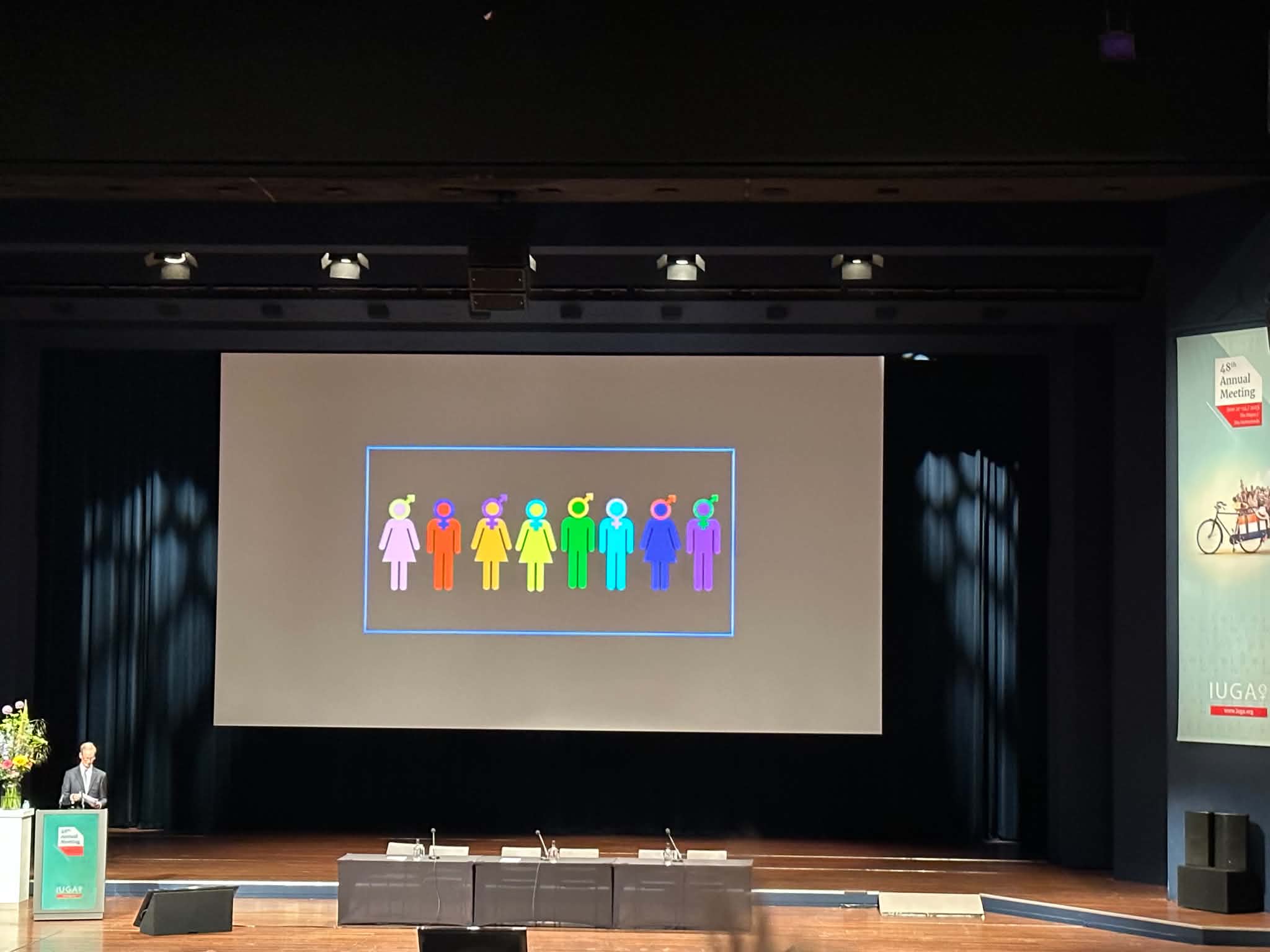
Attending IUGA in the Hague in 2023 recognising Pride month
Samantha is my colleague, friend and expert in so many complex areas in pelvic health physiotherapy at Active Women’s Physiotherapy. Sam came to work at Sue Croft Physiotherapy when she returned to Brisbane after a stint in Darwin and many years in the US. She has demonstrated her knowledge, compassion and kindness in the very complex area of LGBTQIA+ pelvic health physiotherapy. Luckily for us she is still working at Active Women’s Health Physiotherapy and I asked her to contribute to my Pelvic Floor Recovery blog as June is Pride Month.
Sam’s blog follows.

Dr Samantha Richter
Pride Month and Physiotherapy: Providing Inclusive Care for Gender Diverse Patients
Pride Month is a time to celebrate diversity, acknowledge the experiences of LGBTQIA+ communities, and reflect on how healthcare professionals can create safe, respectful, and equitable environments for all patients. For physiotherapists, this includes understanding the unique healthcare needs of gender diverse individuals and ensuring that care is delivered with dignity, cultural sensitivity, and clinical excellence.
Why Inclusive Physiotherapy Matters
Gender diverse people—including transgender, non-binary, genderqueer, and other individuals whose gender identity differs from the sex assigned at birth—often face barriers when accessing healthcare. These barriers can include:
- Fear of discrimination
- Previous negative healthcare experiences
- Lack of provider knowledge
- Concerns about being misgendered or misunderstood.
Physiotherapists are well positioned to help address these challenges by creating welcoming clinical environments and delivering person-centred care that respects each patient’s identity and lived experience.
Creating a Safe and Affirming Environment
Inclusive care begins before a patient enters the treatment room. Small changes can make a significant difference:
- Using inclusive intake forms that allow patients to indicate their name, pronouns, and gender identity.
- Respecting and consistently using a patient’s chosen name and pronouns.
- Avoiding assumptions about anatomy, relationships, or health goals.
- Displaying visible signs of inclusion, such as Pride symbols or statements of commitment to diversity.
- Ensuring all staff receive training in LGBTQIA+ cultural competence.
These actions help build trust and foster a therapeutic relationship where patients feel comfortable discussing their health concerns.
Communication is Key
One of the most powerful tools physiotherapists have is respectful communication. If unsure about a patient’s pronouns or preferred terminology, asking politely and professionally is appropriate. Mistakes can happen, but acknowledging them briefly, correcting them, and moving forward respectfully helps maintain trust.
Using gender-neutral language when appropriate—for example, “partner” instead of assuming relationship status or “chest” rather than gendered anatomical terms when preferred by the patient—can also contribute to a more inclusive experience.
Pride Month as a Time for Reflection
Pride Month provides an opportunity for physiotherapy professionals to reflect on their practice and identify ways to improve inclusivity. Continuing education, reviewing clinic policies, and engaging with LGBTQIA+ health resources can help clinicians provide better care for gender diverse patients throughout the year.
Inclusive physiotherapy is not about treating patients differently—it is about recognising and respecting diversity while ensuring that every individual receives safe, evidence-based, and compassionate care.
Conclusion
Physiotherapists have an important role in promoting health, mobility, and quality of life for people of all gender identities. By creating welcoming environments, communicating respectfully, and understanding the unique experiences that some gender diverse patients may encounter, physiotherapists can contribute to reducing healthcare disparities and improving patient outcomes.
This Pride Month, we celebrate diversity and reaffirm our commitment to delivering person-centred care where every patient feels seen, respected, and supported.
Thanks Sam for these lovely words.
If you are reading this and you are having pelvic health issues or you have a relative, friend or work colleague who has confided in you, please ring our reception staff who are also kind, caring and well-informed and discuss making an appointment to see one of us, but particularly Sam if you are about to or have undergone gender affirming surgeries.
Everyone is welcome and given the best caring and informed advice at Active Rehabilitation Physiotherapy
Thank you Judy. We try very hard to always!